







1 / 1
"Job — The Trial of the Righteous"
しおりを挟む
Chapter One: Days of Plenty
Tokyo, Minato Ward. At eight o’clock in the morning, the skyline of Aoyama-dori stretched below the highest floor of a skyscraper. Men in suits hurried through the executive offices, while the light of early summer streamed in through a wall of glass.
Behind a heavy door sat Yobu Kido, President and CEO of Kido Holdings, Inc.
“The monthly financial report is ready. We’re holding back on capital investments for now, but we should still keep an eye on overseas expansion…”
One by one, the division heads gave their reports before the president’s desk. Yobu listened, meeting each man’s eyes, offering precise advice in a voice both sharp and calm. To his subordinates, he was a leader to be trusted and revered.
But Yobu was more than a successful executive.
Though the company had been passed down from his father, he was no mere second-generation heir. It was Yobu who shouldered the burden of restructuring after the bursting of the bubble economy, who rebuilt and guided the company into renewed growth. His management style was remarkably sincere. By reforming labor conditions for subcontractors and temporary workers, he won the gratitude of countless small businesses who called him a “benefactor.”
Yet what made him a truly singular man was his faith.
Every morning at five, he would walk to a nearby church and pray in an empty chapel. It was not a formality. He gave thanks for his success, his health, his wealth, and prayed for forgiveness on behalf of all people.
In those prayers, he silently fought against the “seed of arrogance” sprouting in his heart.
“I am blessed”—was that fact becoming, unknowingly, contempt for others?
Had he grown too accustomed to possessing what others lacked?
Yobu feared this more than anything.
At home, he cherished his family. His wife Mariko was calm, a companion in faith who worshiped alongside him. They had three children: their eldest son Yota, a high school student; their eldest daughter Nao, in university; and their youngest, Mika, still in elementary school. They respected him deeply, but to them he was simply a kind and gentle father.
“Papa, are you free this Sunday? You promised we’d go to the library.”
“Nao, shall we go for a run again? Do you remember that riverside course?”
No matter how busy his schedule, Yobu always arranged it around his family’s time.
Those who saw him said:
“Can such a man really exist? Successful in work, faithful at home, and even sincere before God?”
Indeed, everything was too smooth, too perfect.
He was wealthier than anyone, more upright than anyone.
But behind it all, an unseen dialogue was taking place.
The setting: the heavens. The time: beyond time.
Invisible beings spoke:
“Behold Yobu Kido—honest, upright, one who fears God and shuns evil.”
And a shadowy voice replied:
“But is that true faith?
He has never known trial. Everything has been given to him.
If it were taken away, would he still bless God?”
“You may lay a hand on all that he has.
But upon his life—do not touch.”
Thus, silently, the wheel of fate began to turn.
Unseen by Yobu and his family.
That weekend, Yobu attended a charity bazaar at a local welfare facility. He delighted in spending time with the children, his warm presence moving the staff.
“President, you really are the embodiment of goodwill,” a young staffer said.
Yobu smiled.
“I only share what I have been given.
I believe God desires not possession, but sharing.”
Yet before the words had even faded, his phone rang.
“…President, you need to come back at once. There are allegations of falsified accounts at our subsidiary, Hokuetsu Engineering…”
Decades of trust—
No one could have imagined it would unravel with a single news report.
In that instant, the time of trial began.
And this was but the prologue to a story that would weigh the true substance of his faith.
Chapter Two: That Which Falls Apart
That day, the headlines of every major news site carried the same name:
“Kido Holdings Subsidiary Suspected of Accounting Fraud”
“Illegal Dealings at Affiliate—Is the Parent Company CEO Responsible?”
“‘The Good President’ Exposed—Was Moral Management an Illusion?”
The articles focused on the falsified accounts at Hokuetsu Engineering, yet the narrative quickly shifted toward questioning Yobu Kido’s responsibility. There was no evidence of his direct involvement. In truth, no one inside the company even believed he could have known about such deception.
Still, the public wanted a villain.
On social media, the “upright man” was swiftly recast as a hypocrite. Flames of outrage spread in all directions. Past interviews, church sermons, even family photos—everything became fodder for mockery.
“So this guy preaching morals was secretly cooking the books, huh?”
“Faith, family love—it all reeks of fraud.”
“Money and religion don’t mix. God must be laughing.”
At the press conference, Yobu bowed deeply before the cameras.
“…It is true I did not know about these acts. But ignorance does not absolve me. As head of the group, all responsibility lies with me.”
The hall fell silent.
He endured the baseless accusations in silence. He did not defend himself. Instead, he devoted himself to investigation and apology. Yet the world showed no mercy.
Branded “the fallen symbol of ideals,” he was pressured to step down.
The board issued a formal request for his resignation.
The media attacked relentlessly.
Shareholders shouted in fury.
Even his own employees began to show unease in their eyes.
In the end, he resigned from his post as CEO.
That night, Yobu sat with his wife, Mariko, in the living room. The quiet was broken only by the sound of tea being poured into her cup.
“…You did nothing wrong. So why did it come to this?” she murmured, staring at a magazine cover spread across the table.
The headline read “The Hypocrite CEO,” accompanied by unauthorized photos of their family.
“The children too… Nao said someone at university asked her today, ‘Is your father that man on the news?’”
Yobu closed his eyes in silence. The weight he bore had now reached and wounded the ones dearest to him.
That weekend, tragedy struck again. His eldest son, Yota, was in a traffic accident. On his motorbike, returning from a friend’s house, he was struck by a car swerving lanes. He lost consciousness instantly.
At the hospital, Yobu knelt at his son’s bedside, staring at the boy under an oxygen mask.
“God, if this is all a trial meant for me, then let it fall on me alone. Spare my children. Spare my wife…”
Three days later, his old university friends came to visit. Once known as the “Four Wise Men,” they were now a lawyer, a doctor, and a professor.
Professor Sugihara spoke first.
“Yobu, your faith is admirable. But tell me honestly—don’t you feel anger toward God?”
“…No. Not yet. It’s too soon for anger.”
Lawyer Kano interrupted.
“I can’t understand it. You’ve been better than any man I know. You gave, you protected your employees, you were a good father. And this is what you get? If God is real, why put you through this?”
Yobu fell silent.
Doctor Mizuta leaned forward.
“Suffering always has a reason. Perhaps God is trying to expose the arrogance within you, or some fault you’ve ignored.”
Yobu shook his head quietly.
“I don’t claim to be perfect. But I have not lived a lie.
Yet everything I built on faith is collapsing around me. …What is this?”
From then on, Yobu lived in silence.
The company spiraled into chaos. Journalists camped outside his home.
The public neither forgot him nor forgave him; they simply continued to gawk.
Yota remained in a coma.
Nao grew reclusive.
Mika cried through the nights.
Even at church, no one spoke to him.
And God too, remained silent.
One night, Yobu finally cried out:
“Answer me, God! Why strike me down so? Why must my children suffer too?”
Only silence replied.
Only the sound of the cold night wind.
Then, one small thing happened.
One evening, Yobu sat on a park bench when a homeless-looking man approached.
“Brother, could you spare me some bread?”
Without hesitation, Yobu handed over the convenience store bag he held.
The man took it with a bow and walked away. But after a few steps, he turned and said:
“Brother, you haven’t lost. You’ve only been stripped bare.
The true victor is the one who, even when naked, can still give to others.”
Tears welled in Yobu’s eyes.
God remained silent.
But within Yobu, a faint certainty began to take root.
Faith is not about seeking reward.
Faith is about holding fast to God, even when no reward comes at all.
Chapter Three: Rebirth
Before dawn on a winter morning, standing by the dim window of the hospital room, Yobu Kido prayed in silence.
He had been holding the hand of his unconscious son, Yota, for hours.
The voices of nurses, the footsteps of doctors—all seemed like happenings from some distant world.
Then—
The hand he held trembled faintly.
“…Yota?”
Yobu raised his voice in surprise.
The monitor’s waveform shifted, the nurse call alarmed, and a nurse rushed in.
“…His eyes…”
Yota’s eyelids stirred.
And then, for a brief moment—he looked at his father.
Seconds later his consciousness sank again, but it was the first true sign of recovery.
A few days later, Yobu visited the church chapel.
Once a symbol of faith, it now seemed no more than a quiet space.
And yet, within its silence, he felt something new.
It was not an answer.
Rather, it was the strength of believing even without an answer.
Prayer, he realized, was not a contract to have wishes fulfilled.
It was a dialogue to restore a broken relationship.
That very silence might have been trust placed upon him.
And within it lay a truth visible only to those who keep questioning.
When Yobu heard that his company had filed for civil rehabilitation, he was not surprised.
In such chaos, no one had been able to save the business.
But one email from a former employee struck his heart:
“President, why don’t we try starting something new together again?”
It came from a young woman who had once been in the sales department, now working in social welfare.
“What society needs is not a company that is merely ‘useful,’ but one that is truly ‘good.’”
That single line pushed him forward.
He let go of the Kido Group and instead founded a community-based NPO.
Its work: child poverty support, educational aid, food relief in disasters.
Not profit-driven, but guided by one standard—“someone’s tomorrow worth living.”
Gathered around him were old colleagues, former partners, and local strangers alike.
What brought them together was only this: “There is someone we can trust.”
His son Yota, after rehabilitation, returned to university.
Though quieter than before, he seemed to carry deeper strength.
“Dad… before the accident, I kinda mocked God.
But when I woke, the first thing I saw was you praying. That wasn’t a dream, was it?”
Yobu simply nodded.
His daughter Nao took longer to heal, but began joining volunteer work.
“In my seminar, I’m going to study NPOs,”
she said, bringing tears to her father’s eyes.
His wife Mariko now smiled with greater calm.
“Maybe God answers in silence. In the end, this path might be the one that fits us best.”
And little Mika, in a school essay, wrote:
“My dad is the strongest.
Even when he has nothing, he stays kind.”
One day at a park food distribution, a journalist he once knew appeared.
“President… no, I guess you’re ‘Representative’ now.”
“Just Yobu is fine. You haven’t changed either.”
The journalist bowed deeply.
“Back then, I thought I was pursuing justice. But what drove me was curiosity.
May I write about your new start?”
Yobu smiled.
“I have nothing to hide. I only reexamined what matters most.
If you can write that truth, then by all means.”
One night, Yobu once again sat in the empty chapel.
From his pocket, he pulled the note once given by a homeless man:
“You are not defeated. You have only been stripped bare.
And still, the one who keeps giving—that is the one who has truly won.”
He laughed softly.
He had already found his answer.
True wealth was not money or fame.
It was whether one could reach out to another’s pain.
Faith was not about reward.
It was “the will to keep believing, enduring the silence.”
Just then, a breeze passed through—
as if whispering, “That is enough.”
And so, Yobu Kido’s story did not end in tragedy.
He had lost everything, but in the loss discovered what must never be abandoned.
Goodness may not always be rewarded.
Yet those who refuse to forsake goodness are truly blessed.
Some might still ask, “What did God give him?”
But now he could answer:
“God gave me, once more, a reason to believe.”
Epilogue: The Voice of God
That night, Yobu fell into a rare, deep sleep.
In his dream, he stood in a vast wilderness. The wind whipped up the sand, and the sky stretched out without end.
Then, from nowhere, a voice resounded.
It was not a voice, and yet it was undeniably words:
“Yobu Kido, you have kept asking.
But before you asked, did you know?
Who laid the foundations of the world?”
Yobu turned, but saw no one.
Only the wind continued to question him:
“Did you raise the pillars that hold up the sky?
Who set the boundaries of the sea?
Have you seen the hand that summons lightning and moves the clouds?”
Yobu fell to his knees.
“I have not seen. I know nothing.
I only clung to my own small sense of right.
…I thought that was all there was.”
The wind replied softly:
“That is enough.
To the one who does not know, I speak.
Because you did not know, you asked.
And in silence, you kept looking toward Me.
That is your faith.
You have not lost.
You have chosen.”
In the morning, Yobu awoke.
The sunlight streaming through the window gently touched his eyelids.
A dream? A vision?
Yet within him was an unshakable certainty.
God had answered.
Not as words, but as presence.
Faith was not about understanding God’s justice.
It was about turning back to God even when understanding failed.
Though he carried his questions unanswered, he had not abandoned God.
And in that silence, God had given him the blessing called trust.
Weeks later, the NPO Yobu had founded launched a full-scale educational support project in partnership with a local government.
Donations and aid began flowing in from all over the country.
Yobu did not stand at the center of it all. Instead, he worked quietly among the staff, doing humble tasks.
One day, a boy told him:
“The notebook you gave me—I use it every day. Someday, when I grow up, I’ll repay you.”
Yobu smiled and answered:
“When that day comes, just hand a notebook to someone else. That will be your repayment.”
He returned once again to the chapel.
This time, not to meet anyone, but simply to be.
Sitting on a pew, he closed his eyes in silence.
He did not pray. He only felt that God was there.
No more questions.
No answers needed.
Only the certainty of being together glowed quietly in the depths of his heart.
Someone once asked Yobu:
“Is faith a means to gain something?”
He slowly shook his head.
“Faith is believing in Someone you cannot abandon, even when you gain nothing.
And in the end, realizing that this Someone never abandoned you.”
________________________________________
There was once a man who possessed everything.
He lost it all, and in silence and suffering, he kept asking.
But in losing, he gained.
Because his hands held nothing, the emptiness itself became the dwelling place of God.
Now, his name may quietly fade from people’s memories.
Yet the good he brought forth continues to sprout somewhere in this world.
The story of a faith that surpassed silence ends here.
Or perhaps, it continues—
as the story of each one of us, living now.
Tokyo, Minato Ward. At eight o’clock in the morning, the skyline of Aoyama-dori stretched below the highest floor of a skyscraper. Men in suits hurried through the executive offices, while the light of early summer streamed in through a wall of glass.
Behind a heavy door sat Yobu Kido, President and CEO of Kido Holdings, Inc.
“The monthly financial report is ready. We’re holding back on capital investments for now, but we should still keep an eye on overseas expansion…”
One by one, the division heads gave their reports before the president’s desk. Yobu listened, meeting each man’s eyes, offering precise advice in a voice both sharp and calm. To his subordinates, he was a leader to be trusted and revered.
But Yobu was more than a successful executive.
Though the company had been passed down from his father, he was no mere second-generation heir. It was Yobu who shouldered the burden of restructuring after the bursting of the bubble economy, who rebuilt and guided the company into renewed growth. His management style was remarkably sincere. By reforming labor conditions for subcontractors and temporary workers, he won the gratitude of countless small businesses who called him a “benefactor.”
Yet what made him a truly singular man was his faith.
Every morning at five, he would walk to a nearby church and pray in an empty chapel. It was not a formality. He gave thanks for his success, his health, his wealth, and prayed for forgiveness on behalf of all people.
In those prayers, he silently fought against the “seed of arrogance” sprouting in his heart.
“I am blessed”—was that fact becoming, unknowingly, contempt for others?
Had he grown too accustomed to possessing what others lacked?
Yobu feared this more than anything.
At home, he cherished his family. His wife Mariko was calm, a companion in faith who worshiped alongside him. They had three children: their eldest son Yota, a high school student; their eldest daughter Nao, in university; and their youngest, Mika, still in elementary school. They respected him deeply, but to them he was simply a kind and gentle father.
“Papa, are you free this Sunday? You promised we’d go to the library.”
“Nao, shall we go for a run again? Do you remember that riverside course?”
No matter how busy his schedule, Yobu always arranged it around his family’s time.
Those who saw him said:
“Can such a man really exist? Successful in work, faithful at home, and even sincere before God?”
Indeed, everything was too smooth, too perfect.
He was wealthier than anyone, more upright than anyone.
But behind it all, an unseen dialogue was taking place.
The setting: the heavens. The time: beyond time.
Invisible beings spoke:
“Behold Yobu Kido—honest, upright, one who fears God and shuns evil.”
And a shadowy voice replied:
“But is that true faith?
He has never known trial. Everything has been given to him.
If it were taken away, would he still bless God?”
“You may lay a hand on all that he has.
But upon his life—do not touch.”
Thus, silently, the wheel of fate began to turn.
Unseen by Yobu and his family.
That weekend, Yobu attended a charity bazaar at a local welfare facility. He delighted in spending time with the children, his warm presence moving the staff.
“President, you really are the embodiment of goodwill,” a young staffer said.
Yobu smiled.
“I only share what I have been given.
I believe God desires not possession, but sharing.”
Yet before the words had even faded, his phone rang.
“…President, you need to come back at once. There are allegations of falsified accounts at our subsidiary, Hokuetsu Engineering…”
Decades of trust—
No one could have imagined it would unravel with a single news report.
In that instant, the time of trial began.
And this was but the prologue to a story that would weigh the true substance of his faith.
Chapter Two: That Which Falls Apart
That day, the headlines of every major news site carried the same name:
“Kido Holdings Subsidiary Suspected of Accounting Fraud”
“Illegal Dealings at Affiliate—Is the Parent Company CEO Responsible?”
“‘The Good President’ Exposed—Was Moral Management an Illusion?”
The articles focused on the falsified accounts at Hokuetsu Engineering, yet the narrative quickly shifted toward questioning Yobu Kido’s responsibility. There was no evidence of his direct involvement. In truth, no one inside the company even believed he could have known about such deception.
Still, the public wanted a villain.
On social media, the “upright man” was swiftly recast as a hypocrite. Flames of outrage spread in all directions. Past interviews, church sermons, even family photos—everything became fodder for mockery.
“So this guy preaching morals was secretly cooking the books, huh?”
“Faith, family love—it all reeks of fraud.”
“Money and religion don’t mix. God must be laughing.”
At the press conference, Yobu bowed deeply before the cameras.
“…It is true I did not know about these acts. But ignorance does not absolve me. As head of the group, all responsibility lies with me.”
The hall fell silent.
He endured the baseless accusations in silence. He did not defend himself. Instead, he devoted himself to investigation and apology. Yet the world showed no mercy.
Branded “the fallen symbol of ideals,” he was pressured to step down.
The board issued a formal request for his resignation.
The media attacked relentlessly.
Shareholders shouted in fury.
Even his own employees began to show unease in their eyes.
In the end, he resigned from his post as CEO.
That night, Yobu sat with his wife, Mariko, in the living room. The quiet was broken only by the sound of tea being poured into her cup.
“…You did nothing wrong. So why did it come to this?” she murmured, staring at a magazine cover spread across the table.
The headline read “The Hypocrite CEO,” accompanied by unauthorized photos of their family.
“The children too… Nao said someone at university asked her today, ‘Is your father that man on the news?’”
Yobu closed his eyes in silence. The weight he bore had now reached and wounded the ones dearest to him.
That weekend, tragedy struck again. His eldest son, Yota, was in a traffic accident. On his motorbike, returning from a friend’s house, he was struck by a car swerving lanes. He lost consciousness instantly.
At the hospital, Yobu knelt at his son’s bedside, staring at the boy under an oxygen mask.
“God, if this is all a trial meant for me, then let it fall on me alone. Spare my children. Spare my wife…”
Three days later, his old university friends came to visit. Once known as the “Four Wise Men,” they were now a lawyer, a doctor, and a professor.
Professor Sugihara spoke first.
“Yobu, your faith is admirable. But tell me honestly—don’t you feel anger toward God?”
“…No. Not yet. It’s too soon for anger.”
Lawyer Kano interrupted.
“I can’t understand it. You’ve been better than any man I know. You gave, you protected your employees, you were a good father. And this is what you get? If God is real, why put you through this?”
Yobu fell silent.
Doctor Mizuta leaned forward.
“Suffering always has a reason. Perhaps God is trying to expose the arrogance within you, or some fault you’ve ignored.”
Yobu shook his head quietly.
“I don’t claim to be perfect. But I have not lived a lie.
Yet everything I built on faith is collapsing around me. …What is this?”
From then on, Yobu lived in silence.
The company spiraled into chaos. Journalists camped outside his home.
The public neither forgot him nor forgave him; they simply continued to gawk.
Yota remained in a coma.
Nao grew reclusive.
Mika cried through the nights.
Even at church, no one spoke to him.
And God too, remained silent.
One night, Yobu finally cried out:
“Answer me, God! Why strike me down so? Why must my children suffer too?”
Only silence replied.
Only the sound of the cold night wind.
Then, one small thing happened.
One evening, Yobu sat on a park bench when a homeless-looking man approached.
“Brother, could you spare me some bread?”
Without hesitation, Yobu handed over the convenience store bag he held.
The man took it with a bow and walked away. But after a few steps, he turned and said:
“Brother, you haven’t lost. You’ve only been stripped bare.
The true victor is the one who, even when naked, can still give to others.”
Tears welled in Yobu’s eyes.
God remained silent.
But within Yobu, a faint certainty began to take root.
Faith is not about seeking reward.
Faith is about holding fast to God, even when no reward comes at all.
Chapter Three: Rebirth
Before dawn on a winter morning, standing by the dim window of the hospital room, Yobu Kido prayed in silence.
He had been holding the hand of his unconscious son, Yota, for hours.
The voices of nurses, the footsteps of doctors—all seemed like happenings from some distant world.
Then—
The hand he held trembled faintly.
“…Yota?”
Yobu raised his voice in surprise.
The monitor’s waveform shifted, the nurse call alarmed, and a nurse rushed in.
“…His eyes…”
Yota’s eyelids stirred.
And then, for a brief moment—he looked at his father.
Seconds later his consciousness sank again, but it was the first true sign of recovery.
A few days later, Yobu visited the church chapel.
Once a symbol of faith, it now seemed no more than a quiet space.
And yet, within its silence, he felt something new.
It was not an answer.
Rather, it was the strength of believing even without an answer.
Prayer, he realized, was not a contract to have wishes fulfilled.
It was a dialogue to restore a broken relationship.
That very silence might have been trust placed upon him.
And within it lay a truth visible only to those who keep questioning.
When Yobu heard that his company had filed for civil rehabilitation, he was not surprised.
In such chaos, no one had been able to save the business.
But one email from a former employee struck his heart:
“President, why don’t we try starting something new together again?”
It came from a young woman who had once been in the sales department, now working in social welfare.
“What society needs is not a company that is merely ‘useful,’ but one that is truly ‘good.’”
That single line pushed him forward.
He let go of the Kido Group and instead founded a community-based NPO.
Its work: child poverty support, educational aid, food relief in disasters.
Not profit-driven, but guided by one standard—“someone’s tomorrow worth living.”
Gathered around him were old colleagues, former partners, and local strangers alike.
What brought them together was only this: “There is someone we can trust.”
His son Yota, after rehabilitation, returned to university.
Though quieter than before, he seemed to carry deeper strength.
“Dad… before the accident, I kinda mocked God.
But when I woke, the first thing I saw was you praying. That wasn’t a dream, was it?”
Yobu simply nodded.
His daughter Nao took longer to heal, but began joining volunteer work.
“In my seminar, I’m going to study NPOs,”
she said, bringing tears to her father’s eyes.
His wife Mariko now smiled with greater calm.
“Maybe God answers in silence. In the end, this path might be the one that fits us best.”
And little Mika, in a school essay, wrote:
“My dad is the strongest.
Even when he has nothing, he stays kind.”
One day at a park food distribution, a journalist he once knew appeared.
“President… no, I guess you’re ‘Representative’ now.”
“Just Yobu is fine. You haven’t changed either.”
The journalist bowed deeply.
“Back then, I thought I was pursuing justice. But what drove me was curiosity.
May I write about your new start?”
Yobu smiled.
“I have nothing to hide. I only reexamined what matters most.
If you can write that truth, then by all means.”
One night, Yobu once again sat in the empty chapel.
From his pocket, he pulled the note once given by a homeless man:
“You are not defeated. You have only been stripped bare.
And still, the one who keeps giving—that is the one who has truly won.”
He laughed softly.
He had already found his answer.
True wealth was not money or fame.
It was whether one could reach out to another’s pain.
Faith was not about reward.
It was “the will to keep believing, enduring the silence.”
Just then, a breeze passed through—
as if whispering, “That is enough.”
And so, Yobu Kido’s story did not end in tragedy.
He had lost everything, but in the loss discovered what must never be abandoned.
Goodness may not always be rewarded.
Yet those who refuse to forsake goodness are truly blessed.
Some might still ask, “What did God give him?”
But now he could answer:
“God gave me, once more, a reason to believe.”
Epilogue: The Voice of God
That night, Yobu fell into a rare, deep sleep.
In his dream, he stood in a vast wilderness. The wind whipped up the sand, and the sky stretched out without end.
Then, from nowhere, a voice resounded.
It was not a voice, and yet it was undeniably words:
“Yobu Kido, you have kept asking.
But before you asked, did you know?
Who laid the foundations of the world?”
Yobu turned, but saw no one.
Only the wind continued to question him:
“Did you raise the pillars that hold up the sky?
Who set the boundaries of the sea?
Have you seen the hand that summons lightning and moves the clouds?”
Yobu fell to his knees.
“I have not seen. I know nothing.
I only clung to my own small sense of right.
…I thought that was all there was.”
The wind replied softly:
“That is enough.
To the one who does not know, I speak.
Because you did not know, you asked.
And in silence, you kept looking toward Me.
That is your faith.
You have not lost.
You have chosen.”
In the morning, Yobu awoke.
The sunlight streaming through the window gently touched his eyelids.
A dream? A vision?
Yet within him was an unshakable certainty.
God had answered.
Not as words, but as presence.
Faith was not about understanding God’s justice.
It was about turning back to God even when understanding failed.
Though he carried his questions unanswered, he had not abandoned God.
And in that silence, God had given him the blessing called trust.
Weeks later, the NPO Yobu had founded launched a full-scale educational support project in partnership with a local government.
Donations and aid began flowing in from all over the country.
Yobu did not stand at the center of it all. Instead, he worked quietly among the staff, doing humble tasks.
One day, a boy told him:
“The notebook you gave me—I use it every day. Someday, when I grow up, I’ll repay you.”
Yobu smiled and answered:
“When that day comes, just hand a notebook to someone else. That will be your repayment.”
He returned once again to the chapel.
This time, not to meet anyone, but simply to be.
Sitting on a pew, he closed his eyes in silence.
He did not pray. He only felt that God was there.
No more questions.
No answers needed.
Only the certainty of being together glowed quietly in the depths of his heart.
Someone once asked Yobu:
“Is faith a means to gain something?”
He slowly shook his head.
“Faith is believing in Someone you cannot abandon, even when you gain nothing.
And in the end, realizing that this Someone never abandoned you.”
________________________________________
There was once a man who possessed everything.
He lost it all, and in silence and suffering, he kept asking.
But in losing, he gained.
Because his hands held nothing, the emptiness itself became the dwelling place of God.
Now, his name may quietly fade from people’s memories.
Yet the good he brought forth continues to sprout somewhere in this world.
The story of a faith that surpassed silence ends here.
Or perhaps, it continues—
as the story of each one of us, living now.
0
この作品は感想を受け付けておりません。
あなたにおすすめの小説

サレ妻の娘なので、母の敵にざまぁします
二階堂まりい
大衆娯楽
大衆娯楽部門最高記録1位!
※この物語はフィクションです
流行のサレ妻ものを眺めていて、私ならどうする? と思ったので、短編でしたためてみました。
当方未婚なので、妻目線ではなく娘目線で失礼します。

双子の姉がなりすまして婚約者の寝てる部屋に忍び込んだ
海林檎
恋愛
昔から人のものを欲しがる癖のある双子姉が私の婚約者が寝泊まりしている部屋に忍びこんだらしい。
あぁ、大丈夫よ。
だって彼私の部屋にいるもん。
部屋からしばらくすると妹の叫び声が聞こえてきた。

聖女を追放した国は、私が祈らなくなった理由を最後まで知りませんでした
藤原遊
ファンタジー
この国では、人の悪意や欲望、嘘が積み重なると
土地を蝕む邪気となって現れる。
それを祈りによって浄化してきたのが、聖女である私だった。
派手な奇跡は起こらない。
けれど、私が祈るたびに国は荒廃を免れてきた。
――その役目を、誰一人として理解しないまま。
奇跡が少なくなった。
役に立たない聖女はいらない。
そう言われ、私は静かに国を追放された。
もう、祈る理由はない。
邪気を生み出す原因に目を向けず、
後始末だけを押し付ける国を守る理由も。
聖女がいなくなった国で、
少しずつ異変が起こり始める。
けれど彼らは、最後まで気づかなかった。
私がなぜ祈らなくなったのかを。

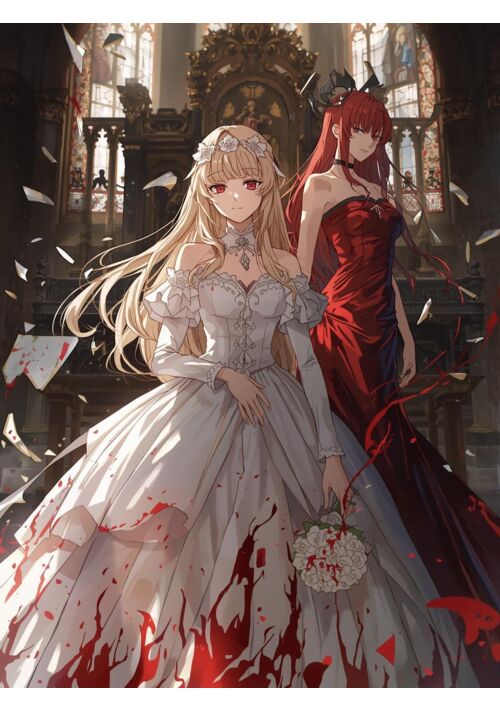
私が王子との結婚式の日に、妹に毒を盛られ、公衆の面前で辱められた。でも今、私は時を戻し、運命を変えに来た。
MayonakaTsuki
恋愛
王子との結婚式の日、私は最も信頼していた人物――自分の妹――に裏切られた。毒を盛られ、公開の場で辱められ、未来の王に拒絶され、私の人生は血と侮辱の中でそこで終わったかのように思えた。しかし、死が私を迎えたとき、不可能なことが起きた――私は同じ回廊で、祭壇の前で目を覚まし、あらゆる涙、嘘、そして一撃の記憶をそのまま覚えていた。今、二度目のチャンスを得た私は、ただ一つの使命を持つ――真実を突き止め、奪われたものを取り戻し、私を破滅させた者たちにその代償を払わせる。もはや、何も以前のままではない。何も許されない。
ユーザ登録のメリット
- 毎日¥0対象作品が毎日1話無料!
- お気に入り登録で最新話を見逃さない!
- しおり機能で小説の続きが読みやすい!
1~3分で完了!
無料でユーザ登録する
すでにユーザの方はログイン
閉じる